Agua De Madre
All things water kefir with Nicola Hart.

Making water kefir for home use is one thing; scaling it up to sustain a business is quite another. As with all ferments, those who practise know that it’s never just about recipe or routine. There’s an unpredictable dance of conditions - temperature, air quality, fruit ripeness, the invisible moods of microbial life - that demands experience and a kind of two‑way understanding between you and your mother culture. Trust is built slowly, and if you’re lucky, a reasonably consistent ferment emerges.
Looking back over nine years of Madre‑sitting, I see how the culture has been both teacher and trickster. She’s offered small miracles and equally theatrical disasters, a few of them so absurd they can only be laughed at now.
Was it a gentle nudge from the Mother herself that pulled me into all this? Or simply the thrill of my taste buds encountering something astonishingly alive for the first time? I can’t say. But I do know that what began in my kitchen soon became something far larger, propelled by that same mixture of curiosity and compulsion that defines most fermenters I know.
There’s always been tension in building a business around a living thing. The Mother resists control, and monetising her gift can feel at odds with her natural abundance and the spirit of sharing that fermentation has always embodied. Historically, these cultures - sourdough starters, dairy kefir, kombucha, and others - were passed from neighbour to neighbour, gifts that carried both nourishment and connection. So to commercialise one felt, at times, like a contradiction, as though I were trying to claim something that belonged to everyone, and to no one.
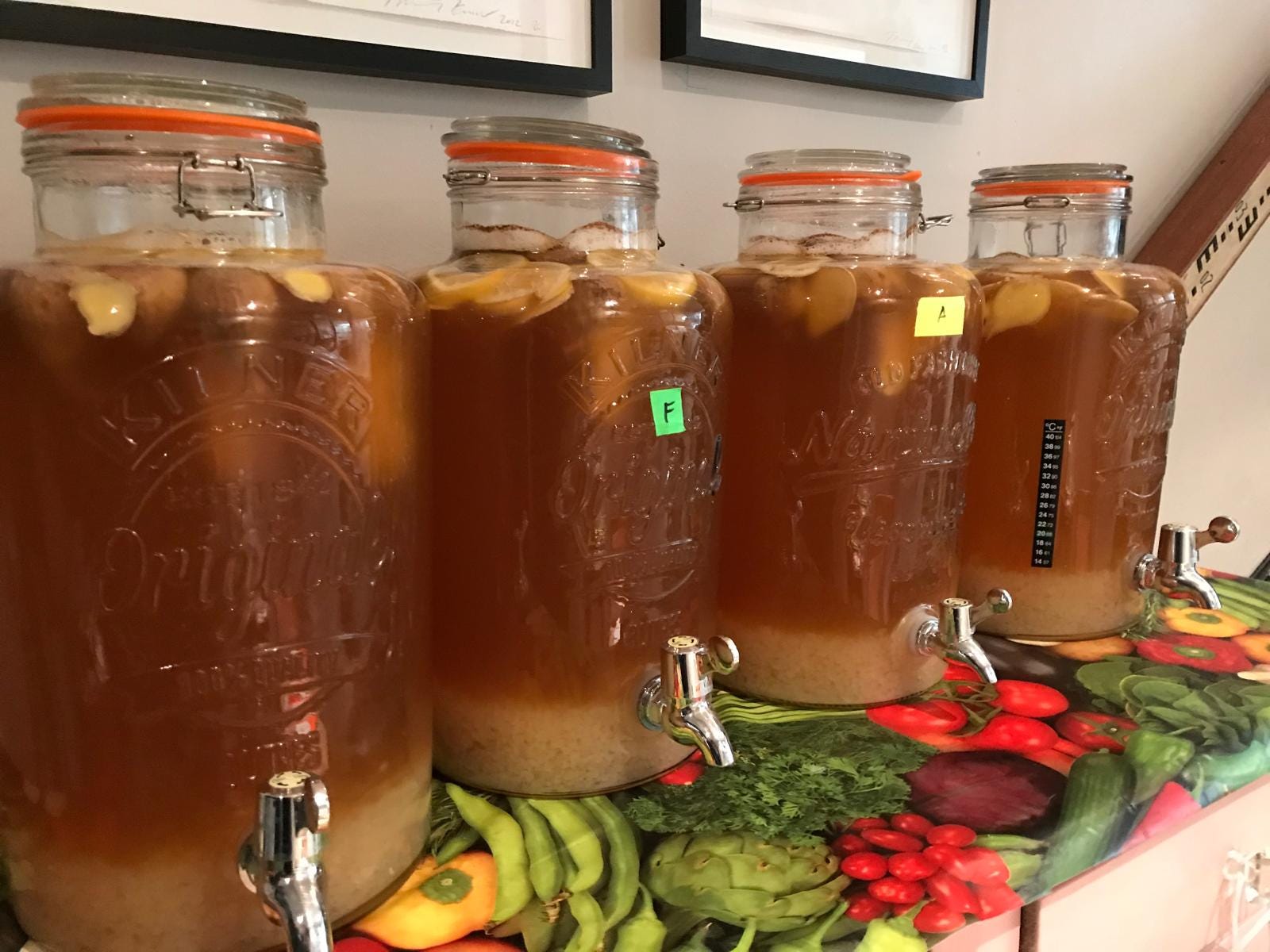
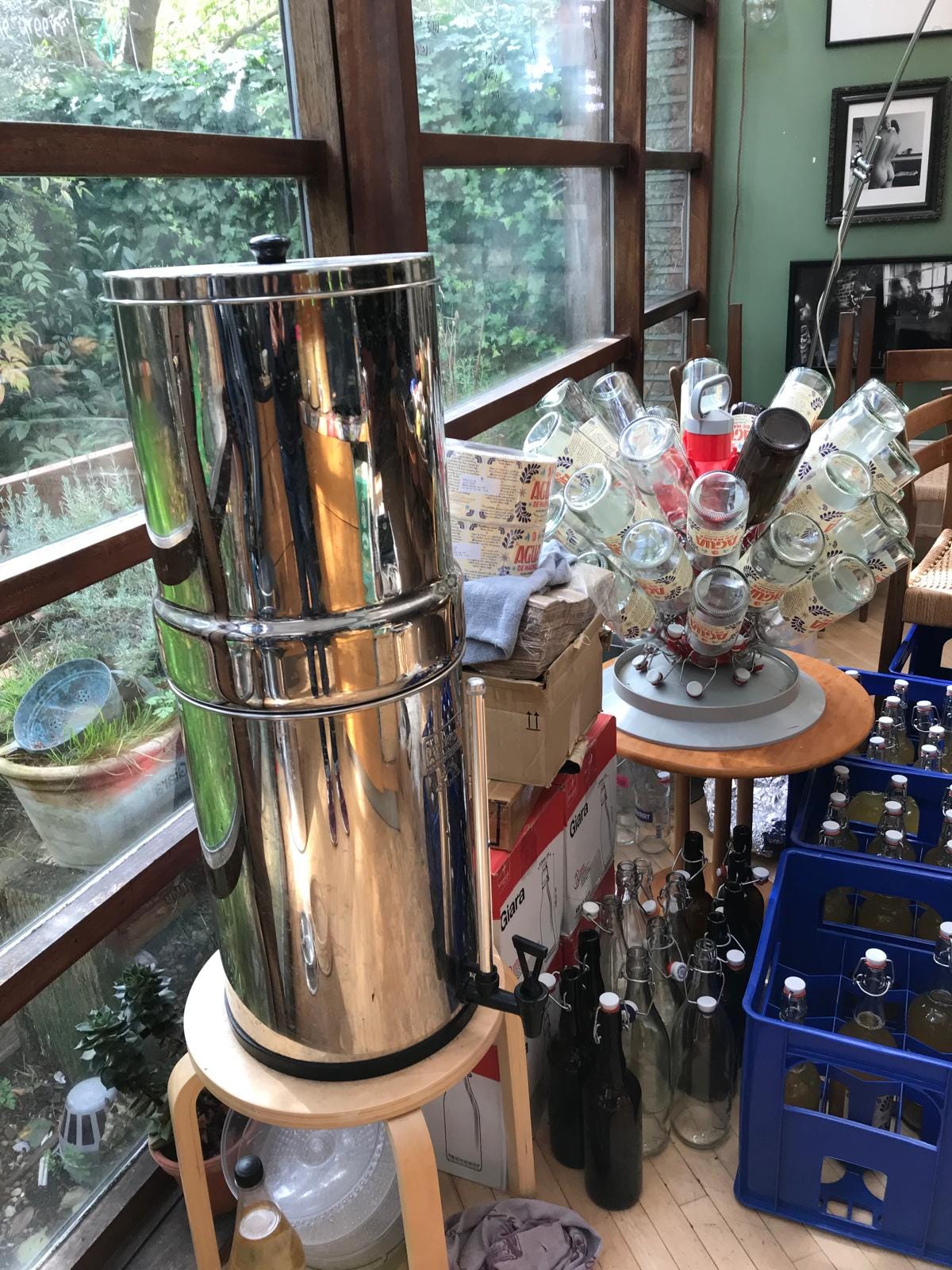
Still, the drive to share is powerful. At first, I was fermenting in simple 5‑litre glass jars. The culture’s growth, sometimes nearly 50% increase in a two‑day ferment, quickly pushed me to 100‑litre vessels. Every surface disappeared beneath jars and bottles; the kitchen table vanished entirely. Dinner was eaten off our knees. Two second‑hand commercial fridges arrived, parked back‑to‑back in the side alley under a homemade roof. Against all advice about ambient temperature, one of them is still running seven years later.
Exploding bottles, sluggish ferments, mysterious moulds, debates about bags or no bags, the eternal question of glass v metal v plastic—these were daily puzzles. Water kefir’s acidic nature raised longer‑term concerns: what would it do to plastics over time? And then there were the subtler influences for example the fruit on the counter, the trees in the garden, even the potential pollution in the air. Every element seemed to touch the Mother’s mood. Feed, rest, and rhythm all mattered, and each change felt like part of a long conversation.
That’s the heart of it, really. Fermenting at scale became a deeply relational act. A conversation that’s practical, sensory, emotional, and at times, spiritual. It demands the same things all good relationships do: attention, patience, and respect for difference.
When it came to upscaling, I always saw the grains as royalty - sensitive yet resilient. We began exploring pharmaceutical‑grade glass assemblies, which now look absolutely mad in hindsight—beautiful but unworkably complex. Eventually, ancient wisdom pointed the way. The amphora, those clay vessels used for millennia to hold wine, inspired our final choice: handmade ceramic eggs crafted for us in Byron Bay, Australia.
Though we no longer brew in the eggs, they remain symbols of that period of experimentation. At least one has found a poetic second life with fellow fermenters at Flux Fermentation, not far from its original London home in Hackney.
As for me, I’ve come full circle: back to small‑scale home ferments, three‑litre jars sitting quietly on the counter. The lessons remain the same—listen to your Madre, respect her rhythms, and she’ll continue to teach you things no spreadsheet or thermometer ever could.
Continue for a water kefir recipe to quench the summer thirst…
